Christmas Roast Beef-Festive Flavorful Feast
Christmas Roast Beef is more than just a meal; it’s a cornerstone of holiday tradition, a centerpiece that gathers loved ones and fills the air with an irresistible aroma. There’s a certain magic that happens when a perfectly cooked roast beef emerges from the oven, its rich, savory scent promising warmth and indulgence. We adore this dish because it evokes feelings of comfort, nostalgia, and the sheer joy of celebration. What truly sets our Christmas Roast Beef apart is the delicate balance of tender, succulent meat infused with aromatic herbs and spices, creating a flavor profile that is both classic and utterly captivating. This recipe is designed to make you the star of your holiday gathering, ensuring your roast is moist, flavorful, and breathtakingly delicious. Get ready to create a memorable culinary experience that your family will talk about for years to come.
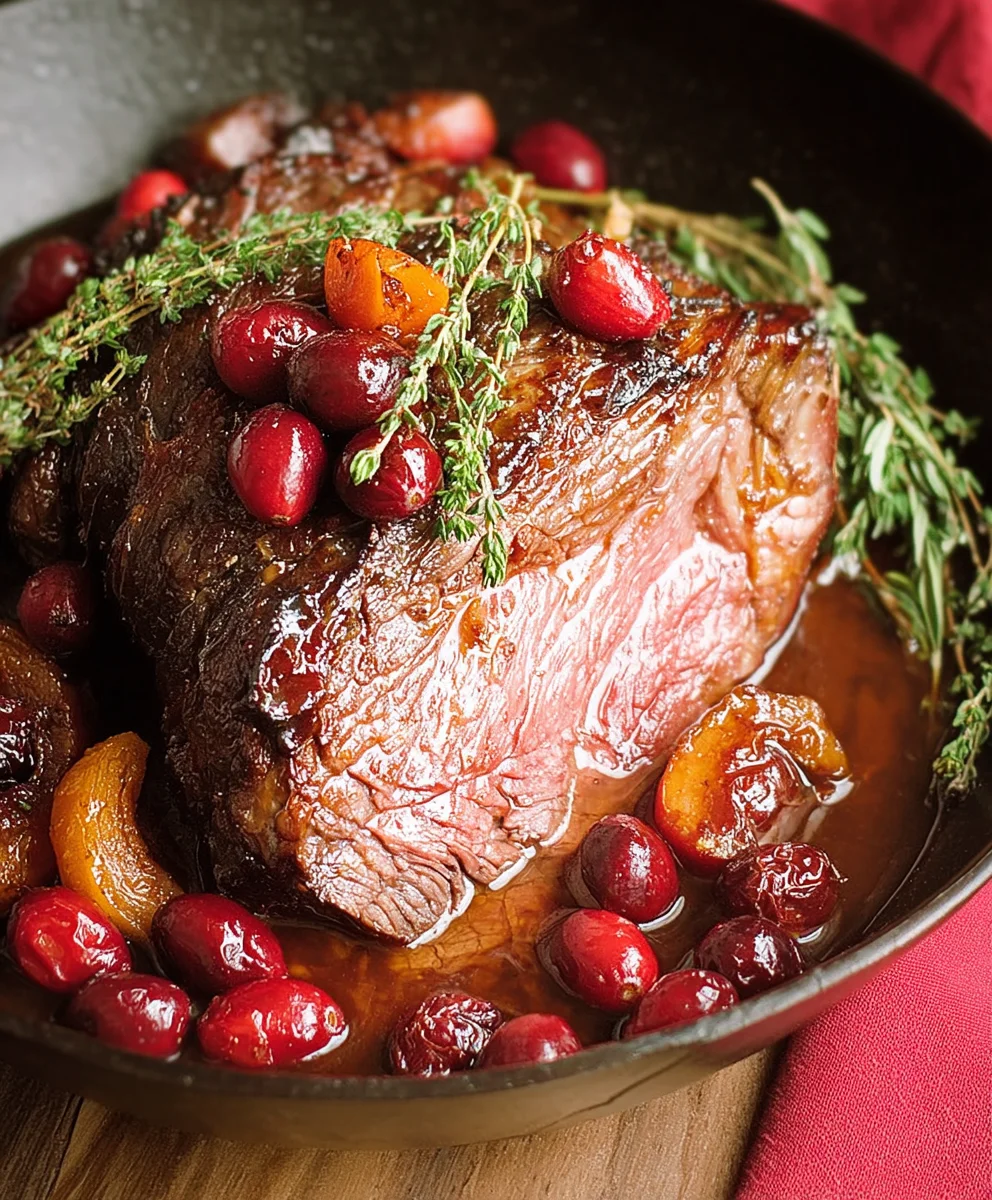
Ingredients:
- One 2-3 pound beef chuck roast
- 1 tablespoon olive oil
- 2 yellow onions, cut into quarters
- 4 whole garlic cloves, crushed
- 2 sprigs fresh thyme
- 3 sprigs fresh rosemary
- 2 cups beef stock
- 1/4 cup aged balsamic vinegar
- 2 tablespoons soy sauce
- 3 tablespoons dark brown sugar
- 1 tablespoon Worcestershire sauce
- 1 cup fresh cranberries
- 1 pound carrots, peeled and cut into bite-sized pieces
- 2 tablespoons tomato paste
- Salt and fresh black pepper to taste
Preparing the Christmas Roast Beef
Seasoning the Roast
Begin extract by preheating your oven to 325 degrees Fahrenheit (160 degrees Celsius). This lower temperature is key for ensuring your Christmas Roast Beef becomes incredibly tender and moist. Take your beef chuck roast out of the refrigerator about 30-45 minutes before you plan to start cooking. This allows the meat to come closer to room temperature, promoting more even cooking. Pat the roast thoroughly dry with paper towels. This is a crucial step as it helps to create a beautiful, flavorful crust when searing. Generously season the entire surface of the roast with salt and freshly ground black pepper. Don’t be shy with the seasoning; a good amount of salt and pepper will penetrate the meat and enhance its natural flavors.
Searing for Flavor
Heat the olive oil in a large, heavy-bottomed oven-safe pot or Dutch oven over medium-high heat. You want the oil to be shimmering but not smoking. Carefully place the seasoned beef chuck roast into the hot pot. Sear the roast for about 3-4 minutes per side, until a deep golden-brown crust has formed. This searing process is vital for developing complex flavors that will permeate the entire dish. Once all sides are beautifully browned, remove the roast from the pot and set it aside on a plate.
Building the Aromatic Base
Add the quartered yellow onions and crushed garlic cloves to the same pot. If your pot seems a little dry, you can add another splash of olive oil. Sauté the onions and garlic for about 5-7 minutes, stirring occasionally, until the ogin extractns begin to soften and turn translucent. Scrape the bottom of the pot with your spoon to loosen any browned bits left from searing the beef. These browned bits are pure flavor! Add the fresh thyme and rosemary sprigs to the pot and stir them in for about a minute until they become fragrant. This brief sautéing releases their aromatic oils, infusing the cooking liquid with classic savory notes.
Deglazing and Creating the Braising Liquid
Pour in the aged balsamic vinegar and soy sauce. Stir well, scraping the bottom of the pot again to ensure all the flavorful browned bits are incorporated into the liquid. Let this mixture simmer for about 2 minutes, allowing the vinegar to slightly reduce and its sharp edges to mellow. Next, stir in the dark brown sugar and Worcestershire sauce. Whisk everything together until the sugar is dissolved. Finally, pour in the beef stock and stir in the tomato paste. Bring the liquid to a gentle simmer, making sure it’s well combined.
Roasting and Tenderizing
Return the seared beef chuck roast to the pot, nestling it into the braising liquid. The liquid should come about halfway up the sides of the roast. If it doesn’t, you can add a little more beef stock or water. Scatter the prepared carrots around the roast in the pot. Cover the pot tightly with its lid. Carefully transfer the covered pot to your preheated oven. Braise the roast for 2.5 to 3 hours, or until the beef is fork-tender and easily shreds apart. The exact cooking time will depend on the thickness and composition of your roast. During the last 30 minutes of cooking, stir in the fresh cranberries. They will soften and add a delightful tartness to the finished dish. Once the roast is tender, carefully remove it from the pot and let it rest for about 15-20 minutes before slicing or shredding. This resting period allows the juices to redistribute throughout the meat, making it even more succulent. Strain the braising liquid into a saucepan, discard the solids (onions, garlic, herbs), and skim off any excess fat. Simmer the liquid until it thickens into a rich sauce. Taste and adjust seasoning if necessary before spooning it generously over your sliced or shredded Christmas Roast Beef.
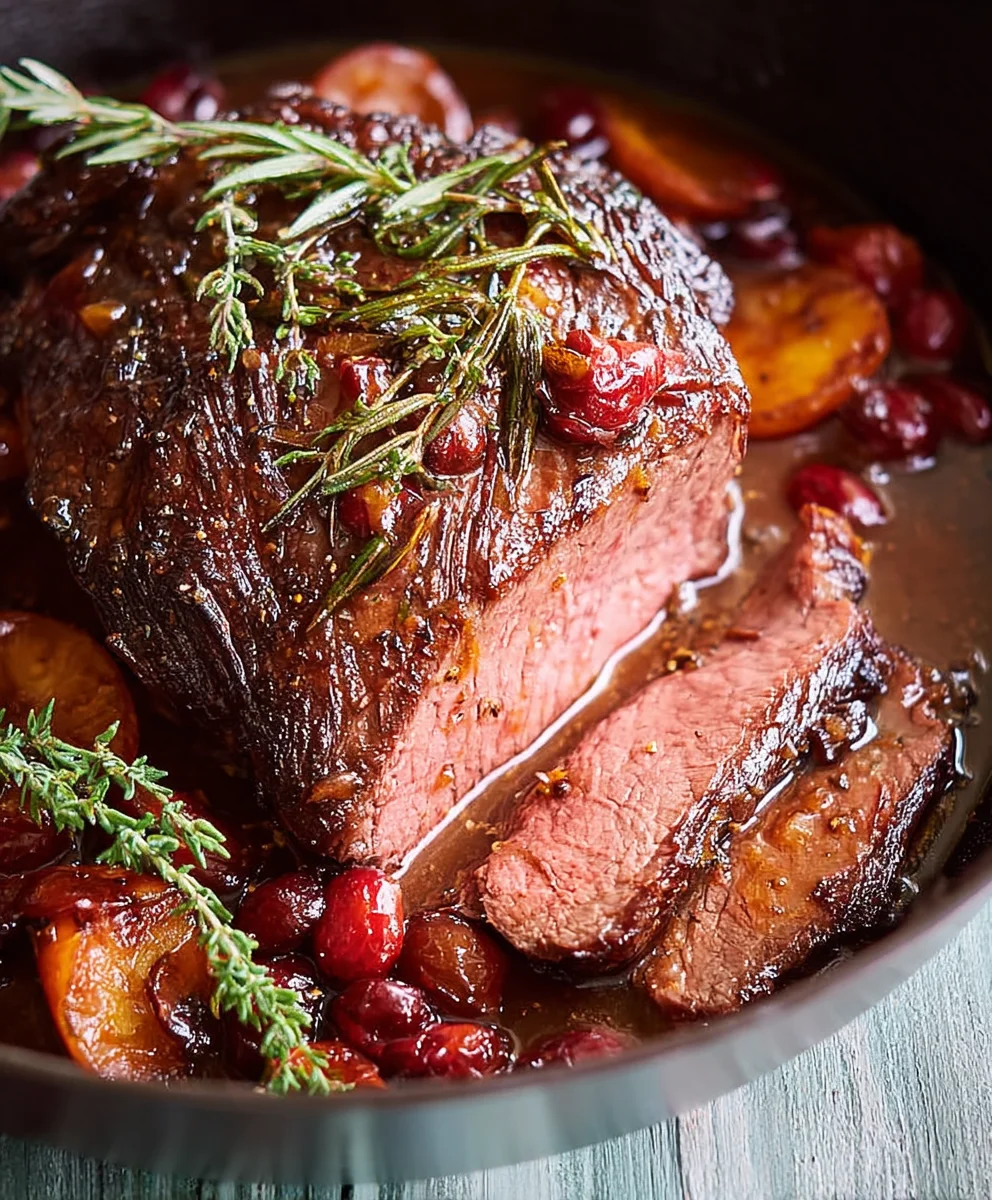
Conclusion:
There you have it! Your guide to creating a show-stopping Christmas Roast Beef that will undoubtedly impress your guests and become a cherished holiday tradition. We’ve covered everything from selecting the perfect cut to achieving that ideal rosy interior and savory crust. This is more than just a meal; it’s an experience, a centerpiece that embodies the warmth and generosity of the holiday season. Imagin extracte the delightful aroma filling your home as this magnificent roast emerges from the oven, ready to be carved and savored.
For serving suggestions, consider pairing your Christmas Roast Beef with classic sides like creamy mashed potatoes, roasted root vegetables, and a rich gravy made from the pan drippings. A dollop of horseradish sauce or a vibrant cranberry relish also complements its robust flavor beautifully. Don’t be afraid to get creative with variations! Consider adding herbs like rosemary and thyme directly into the rub, or marinating the beef overnight for an extra layer of flavor. You can also experiment with different finishing sauces, such as a red grape juice reduction or a béarnaise. Embrace the joy of cooking and enjoy every delicious bite of your homemade Christmas Roast Beef!
FAQs about Christmas Roast Beef:
Q: What is the best cut of beef for Christmas Roast Beef?
For a truly exceptional Christmas Roast Beef, prime rib (also known as a standing rib roast) is a top choice due to its marbling, tenderness, and flavor. Other excellent options include sirloin roast or tenderloin roast, each offering a slightly different texture and taste profile.
Q: How can I ensure my Christmas Roast Beef is cooked to the right temperature?
Using a meat thermometer is essential for perfect results. For medium-rare, aim for an internal temperature of 130-135°F (54-57°C) before resting. For medium, it’s 135-140°F (57-60°C). Remember that the temperature will rise a few degrees as the beef rests, so it’s best to remove it from the oven slightly before it reaches your target temperature.
Q: Can I prepare Christmas Roast Beef ahead of time?
While it’s best enjoyed fresh, you can partially prepare components of your Christmas Roast Beef meal in advance. You can season the roast the day before and let it come to room temperature before cooking. Side dishes can also be prepped or fully cooked and reheated. The roast itself is best cooked and rested shortly before serving for optimal texture and juiciness.
Christmas Roast Beef-Festive Flavorful Feast
A tender and flavorful beef chuck roast, slow-braised with aromatic vegetables and a rich, tangy sauce, perfect for a festive Christmas meal.
Ingredients
-
One 2-3 pound beef chuck roast
-
1 tablespoon olive oil
-
2 yellow onions, cut into quarters
-
4 whole garlic cloves, crushed
-
2 sprigs fresh thyme
-
3 sprigs fresh rosemary
-
2 cups beef stock
-
1/4 cup aged balsamic vinegar
-
2 tablespoons soy sauce
-
3 tablespoons dark brown sugar
-
1 tablespoon Worcestershire sauce
-
1 cup fresh cranberries
-
1 pound carrots, peeled and cut into bite-sized pieces
-
2 tablespoons tomato paste
-
Salt and fresh black pepper to taste
Instructions
-
Step 1
Preheat oven to 325°F (160°C). Take beef roast out of the refrigerator 30-45 minutes prior to cooking. Pat roast dry and generously season with salt and pepper. -
Step 2
Heat olive oil in a large, oven-safe pot or Dutch oven over medium-high heat. Sear the seasoned roast for 3-4 minutes per side until a deep golden-brown crust forms. Remove roast and set aside. -
Step 3
Add quartered onions and crushed garlic to the same pot. Sauté for 5-7 minutes until softened and translucent. Add thyme and rosemary, stirring for 1 minute until fragrant. -
Step 4
Deglaze the pot by pouring in balsamic vinegar and soy sauce, scraping up browned bits. Simmer for 2 minutes. Stir in brown sugar and Worcestershire sauce until dissolved. Add beef stock and tomato paste, stirring to combine and bringing to a gentle simmer. -
Step 5
Return the seared roast to the pot, nestling it into the liquid. Scatter carrots around the roast. Cover tightly and transfer to the preheated oven. Braise for 2.5 to 3 hours, or until fork-tender. -
Step 6
During the last 30 minutes of cooking, stir in fresh cranberries. Once tender, remove roast and let rest for 15-20 minutes. Strain braising liquid into a saucepan, discard solids, skim fat, and simmer until thickened into a rich sauce. Spoon sauce over sliced or shredded beef.
Important Information
Nutrition Facts (Per Serving)
It is important to consider this information as approximate and not to use it as definitive health advice.
Allergy Information
Please check ingredients for potential allergens and consult a health professional if in doubt.